
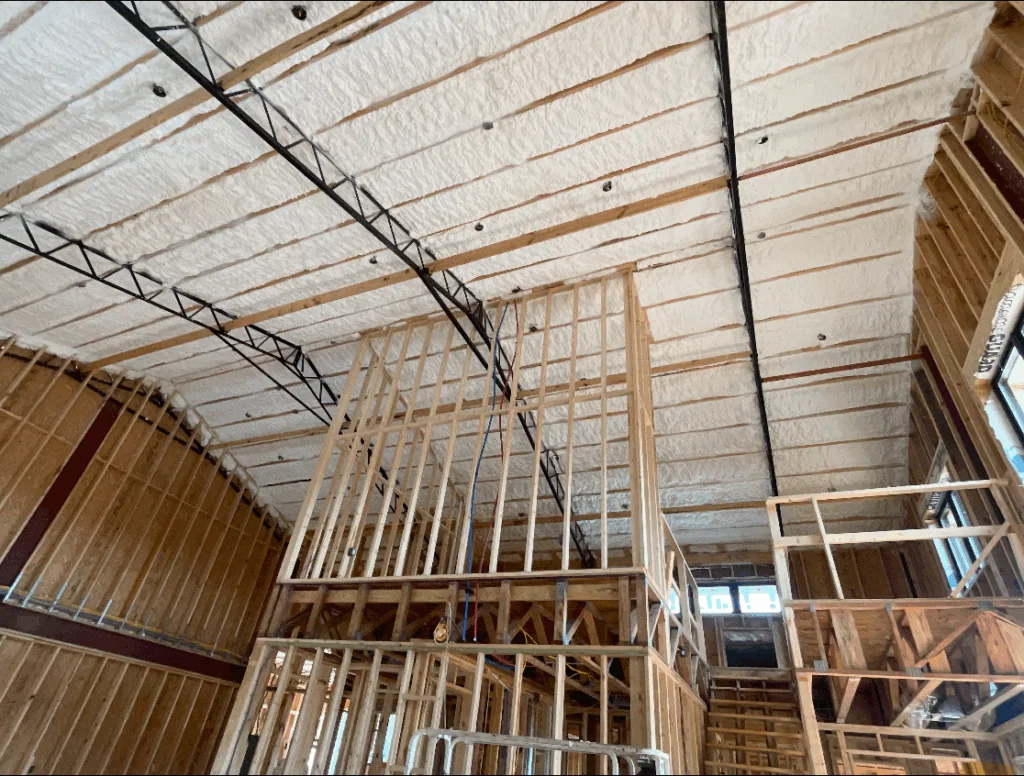
What should you expect to pay for spray foam?
There is no single spray foam insulation price that fits every Auburn or Opelika home. An accessible wall in new construction and an existing attic with old insulation are different jobs, even when their floor areas are the same. Your estimate needs to account for the measured surfaces, foam type, installed thickness, preparation, and any required protective barriers.
Ask for a price tied to a written scope. A low per-square-foot number tells you very little until you know which surfaces it covers and how deep the foam will be. Pro Insulations offers free insulation estimates so you can compare a recommendation for your building with your budget.
This guide explains how that estimate is built. The calculation below is an illustration, not a published Pro Insulations rate or a local average.
Is spray foam priced per square foot or board foot?
A square foot measures an area. A board foot measures the amount of foam: one square foot at one inch thick. Thickness matters because spraying the same wall deeper requires more material.
Sprayed surface area (sq ft) × installed thickness (inches) = board feet
For example, 1,000 square feet of sprayed surface at 3 inches thick is 3,000 board feet. At a hypothetical rate of $1 per board foot, that line item would be $3,000. This is arithmetic to show the method, not a quote, recommended thickness, or complete installed project price. Preparation, removal, coatings, and other work may be separate.
| Sprayed surface | At 3 inches | At 6 inches |
|---|---|---|
| 500 sq ft | 1,500 board feet | 3,000 board feet |
| 1,000 sq ft | 3,000 board feet | 6,000 board feet |
| 1,500 sq ft | 4,500 board feet | 9,000 board feet |
The depths in this table are examples only. The selected product, assembly, R-value target, and local requirements determine the specification for your project. Roof pitch, gables, and wall height also change the surface measurement.
How do open-cell and closed-cell costs compare?
Open-cell and closed-cell foam have different properties, so compare the completed assembly rather than choosing by the lowest material rate. Department of Energy guidance describes both types as potential air barriers when installed at appropriate thicknesses. The product's tested performance and installation instructions still matter.
Open-cell spray foam
Open-cell foam is lower density and generally costs less per board foot than closed-cell foam. It usually needs more thickness to provide the same R-value. It can suit some above-grade walls and roof assemblies, but it is not a substitute for a moisture-control plan.
Closed-cell spray foam
Closed-cell foam is denser and generally provides more R-value per inch. Its moisture properties can make it useful in certain crawl spaces, rim joists, and building assemblies where available depth or moisture exposure affects the choice. Ask the contractor to explain the product's vapor performance at the specified thickness.
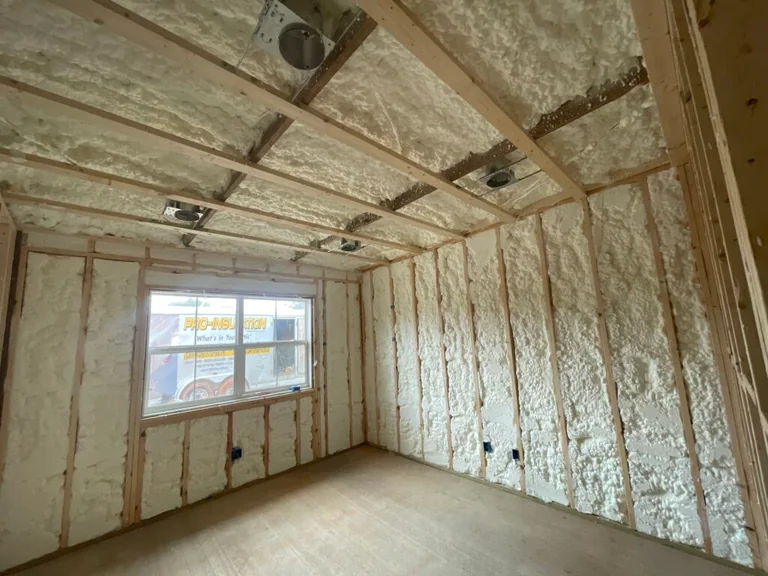
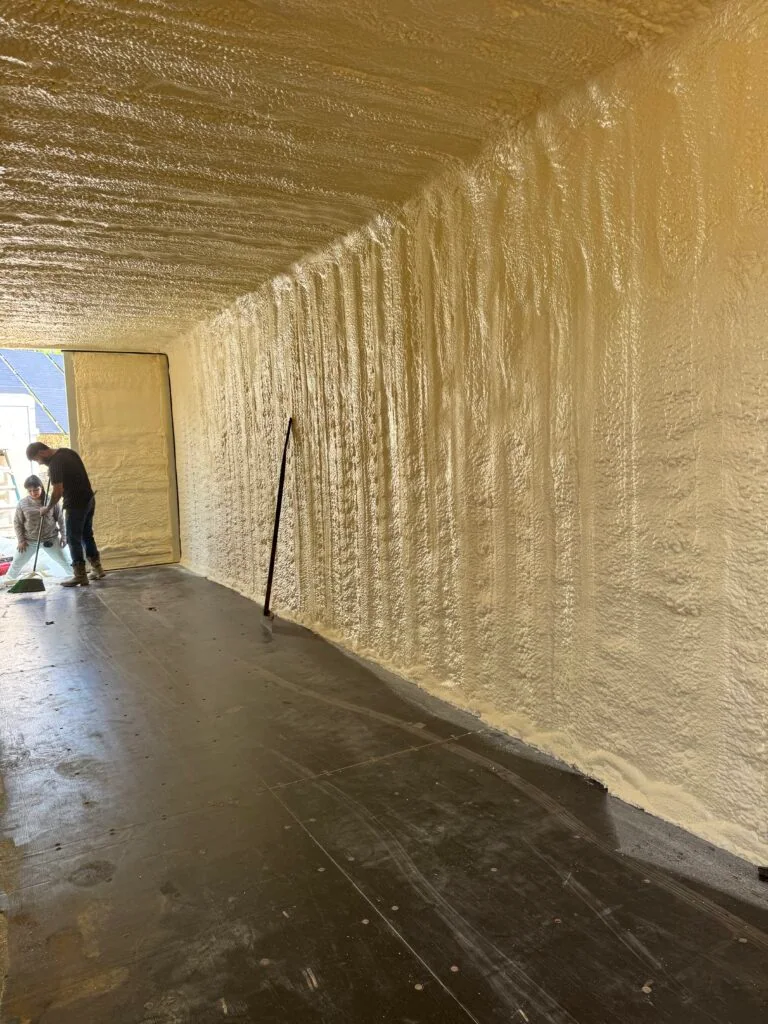
For Auburn and Opelika projects, humidity is a reason to examine the whole assembly, not an automatic reason to choose one foam everywhere. Drainage, roof condition, ventilation, and indoor humidity all affect the recommendation. Read more about our spray foam insulation options before comparing bids.
What changes an Auburn or Opelika insulation estimate?
- The surfaces being insulated
- Roof slopes, tall walls, gables, and irregular framing can require more material and labor than the floor area suggests. Identify whether the quote covers the attic floor, roofline, walls, or a combination.
- Foam thickness and performance target
- More depth means more material. Ask for the named product, intended installed thickness, and R-value rather than accepting "spray foam" as the entire specification.
- Existing insulation and preparation
- Removal, disposal, masking, and access can affect the total. Wet materials or unresolved leaks need attention before they are covered.
- Access and project size
- A tight existing attic takes different preparation from open framing. Small jobs may also have a minimum charge because equipment and crew setup still take time.
- Coatings, barriers, and related work
- Required ignition or thermal protection, ventilation adjustments, and other assembly details may be part of the project. Ask whether they are included and who is responsible for them.
The same questions apply to garage insulation, metal building insulation, and crawl space insulation in Opelika. The space's use and condition should drive the scope.
Does old attic insulation have to come out first?
Sometimes. If the existing insulation is wet, contaminated, damaged, or blocks necessary work, removal may be needed. Changing from an insulated attic floor to an insulated roofline also calls for a plan for the attic's air, thermal, and moisture boundaries.
Ask for attic insulation removal and disposal to be listed separately when required. That makes it easier to compare a quote that includes removal with one that leaves it out. Roof leaks, pests, or moisture damage should be addressed before new insulation goes in.
Is spray foam worth the extra cost over blown-in insulation?
That depends on the problem you are trying to solve. If a conventional vented attic needs more insulation and its air leaks can be sealed separately, blown-in attic insulation may be an economical option. If the project calls for insulating a roofline or fitting insulation into limited space, spray foam may deserve a closer look.
ENERGY STAR recommends combining air sealing with suitable insulation to improve comfort and reduce energy waste. That does not mean every house needs spray foam. Ask for a comparison of practical options for your building, including air sealing and blown-in cellulose.
Avoid a quote that promises a fixed percentage off your utility bill without explaining its assumptions. Savings depend on existing insulation, air leakage, HVAC condition, thermostat settings, weather, and how the home is used.
What should a written spray foam estimate include?
- The exact surfaces and measured area included in the job.
- The foam manufacturer and product, foam type, specified thickness, and intended R-value.
- Preparation, removal, disposal, masking, and cleanup responsibilities.
- Any required protective coatings or barriers and whether their cost is included.
- The plan for ventilation, occupant access, and re-entry based on the product's instructions.
- The full price, payment terms, anticipated schedule, and written warranty details.
Compare those items side by side. If one bid is much lower, ask what changed in the scope. A thinner application, excluded gables, or omitted removal can make two prices look comparable when they cover different work.
Get a spray foam estimate for Auburn or Opelika
Pro Insulations serves Auburn, Opelika, and nearby East Alabama and West Georgia communities. Tell us the property location, the space you want insulated, whether it is new construction or an existing building, and the comfort or moisture issue you want to address.
Photos and approximate measurements are helpful starting points. We can then discuss the assessment needed for a clear recommendation and written estimate.
Spray foam cost questions
How much does spray foam insulation cost in Auburn, AL?
The price depends on sprayed surface area, foam type, installed thickness, access, preparation, and any required barriers or related work. Pro Insulations provides free estimates based on the building and scope. A per-square-foot figure is only useful when the included surfaces and thickness are specified.
Is spray foam insulation more expensive in Opelika than Auburn?
A different city name alone does not establish a price difference. Compare the same foam product, surface measurements, thickness, access, and preparation. The actual project requirements are what a written local estimate needs to explain.
What is the difference between cost per square foot and cost per board foot?
Cost per square foot applies to a stated surface area and must specify the installed thickness. One board foot is one square foot at one inch thick. Multiply sprayed surface area by thickness in inches to find board feet, then apply the quoted board-foot rate.
Does open-cell spray foam cost less than closed-cell?
Open-cell foam generally costs less per board foot, but it usually needs more thickness for the same R-value. Compare the full installed assembly, moisture requirements, and total project scope rather than the rate alone.
Does a spray foam quote include removing old insulation?
Only if removal and disposal are included in the written scope. Ask the contractor to state whether existing insulation must be removed, which areas are included, and whether that work is priced separately.
How long does spray foam installation take?
The schedule depends on project size, access, preparation, removal, and the selected product. Ask for separate expectations for the installation work and for any ventilation or re-entry period required by the manufacturer. They are not necessarily the same.
Do you offer free spray foam insulation estimates in Auburn and Opelika?
Yes. Pro Insulations offers free insulation estimates for Auburn, Opelika, and nearby service areas. Call (256) 790-9771 or use the free estimate page to describe your project.
Related insulation guides
Further reading
These resources explain insulation and air sealing. They do not establish Pro Insulations prices or replace a project assessment.