
Choose for the building
Compare Insulation Options
The right recommendation should explain the problem, the assembly, and the tradeoffs. A more expensive material is not automatically better value.
| Option | When to consider it | What to check |
|---|---|---|
| Air sealing | Accessible leaks around the attic boundary, penetrations, or other parts of the building. | Identify leakage paths and address ventilation and combustion-safety requirements. Air sealing and insulation do different jobs. |
| Blown-in insulation | A conventional vented attic that needs more insulation at the attic floor. | Check existing material, air sealing, moisture, vents, and the target R-value before adding insulation. |
| Fiberglass batts | Accessible wall or floor cavities with room for correctly fitted batts. | Fit matters. Gaps, compression, and air leaks can reduce the performance of the assembly. |
| Spray foam | Assemblies where the specified foam can provide insulation and air control, including some rooflines and tight cavities. | Compare the named product, thickness, moisture design, required protective barriers, and installation/re-entry instructions. |
No material is the best choice for every building. An assessment should explain why a recommendation fits your space and budget.
Does every attic need spray foam?
No. A conventional vented attic may be a good candidate for air sealing followed by additional blown-in insulation at the attic floor. A roofline or another assembly may call for a different approach. Existing moisture, access, HVAC equipment, ventilation, and local requirements affect that choice.
ENERGY STAR's attic-insulation guidance explains checking existing insulation and adding suitable material after air sealing. It is general guidance, not a specification for every building.
When can existing insulation stay?
Clean, dry, suitable existing insulation can sometimes stay beneath added material. Wet, contaminated, damaged, or incorrectly placed material needs assessment first. Compare the proposed removal work separately so you know why it is necessary and what disposal includes.
What about moisture and comfort?
Insulation is not a repair for a roof leak or standing water. Air sealing and moisture control need to fit the whole building. Neither a fixed utility-bill reduction nor a mold-free result can be promised from the material name alone.
Look closely at the assembly
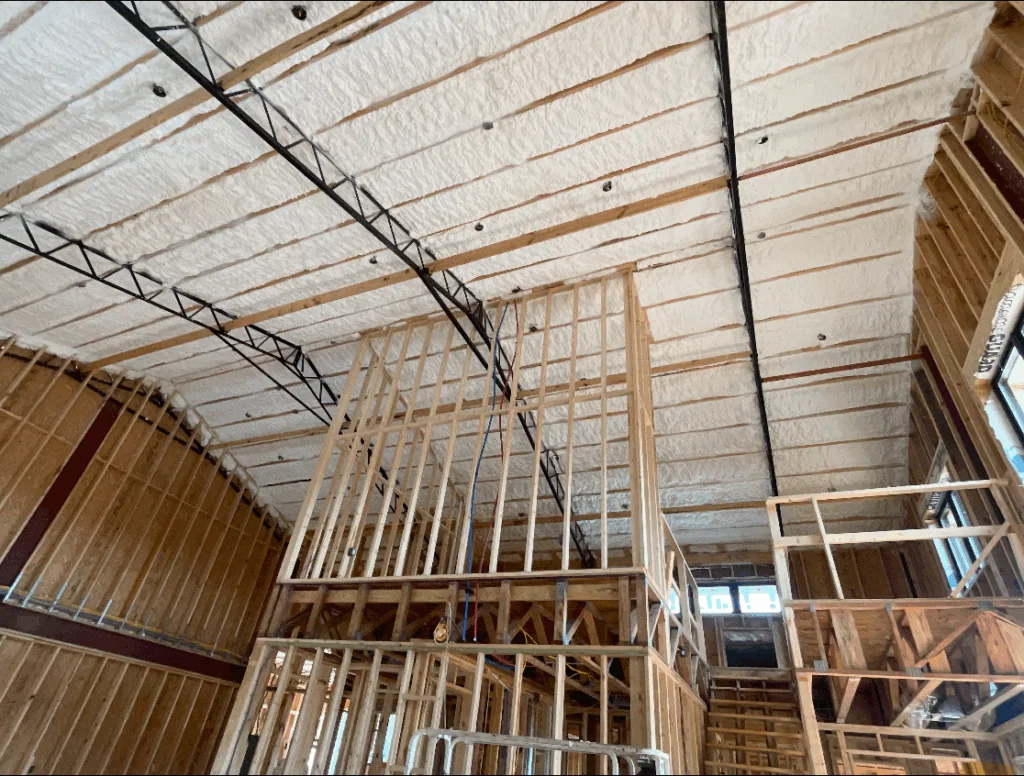
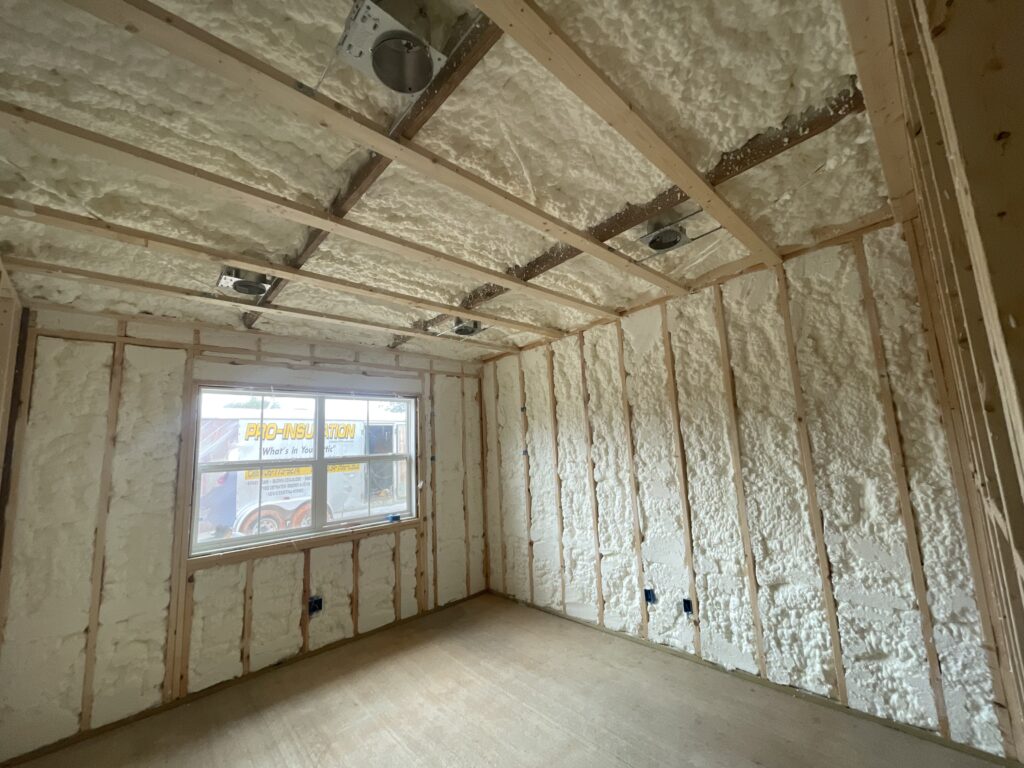
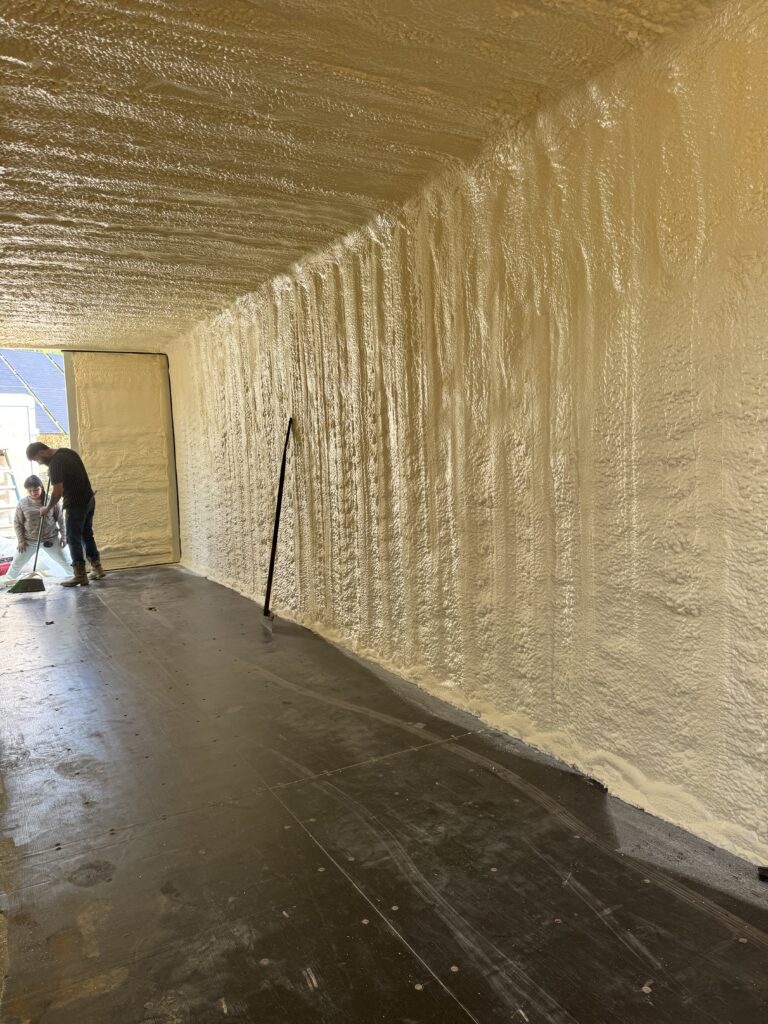
These existing website photos illustrate insulation coverage. They are not before-and-after comparisons or evidence of measured energy savings.
For a deeper comparison, read spray foam versus fiberglass and our cellulose insulation guide.